Boston's Best Bat Removal
We've been voted Boston's best bat removal company the past two years!
Get in touch
Bat Experts
Rapid Response
Trained & Educated
Licensed & Certified
About Boston Bat Removal
Welcome to boston-bat-removal.com. We are the only qualified bat removal company in Boston, Massachusetts. The faint sound of fluttering wings or the gentle scratching noises of animals moving may be relatively quiet, but to the homeowner they are often one of the first signs that will tell them they have a bat infestation present. Bats are actually remarkable creatures that can eat thousands of pesky airborne insects every night, but when they find their way into an attic or a loft space, they can prove to be a serious problem. The biggest issue comes from the guano that bats produce, as this can build up in insulation, cause an unpleasant odor and can contribute to transmitting diseases such as histoplasmosis. If you think that you may have bats in your property, then don't hesitate to contact us as we have years of experience in resolving these situations for our customers. We have a safe method that will exclude all of the bats from your property without using any harmful poisons, and we will seal 100% of the holes the bats will have used to access the area, so that they can't come back again. Our expert technicians can also safely remove and clean the droppings that the bats will have left behind, as well as fumigating the attic or loft space with a disinfectant solution that will make the property safe for the whole family again. We operate 24-7-365, so don't hesitate to call us at 857-895-5000 to discuss your bat problem and schedule a fast appointment.
Residential
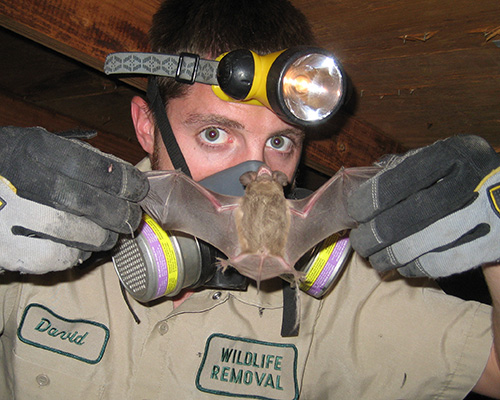
We are experts at removing bats from residential properties. Whether you have a single bat trapped in your house, a colony roosting in your attic, and/or various other problems, there is no need to worry! During our removal process, we make sure to inspect your entire home carefully, tracking down all the entrypoints bats are using to invade your place. Next, we perform a process called live exclusion (where no bats are harmed and all exit your property), then seal all entry holes completely shut. We also take care of the cleanup process after, so your home is safe and clean!
Learn MoreCommercial
Besides residential areas, we also have a wealth of experience removing bats from commercial properties! We begin by investigating the area for possible bat entrances, covering holes even as small as 1/4 of an inch. Through our live exclusion process, bats leave the building through one-way exits, and we seal up every hole afterward. Once the bats have been removed, we perform a cleanup process. This includes dealing with guano, replacing damaged insulation, and decontaminating the place.
Learn More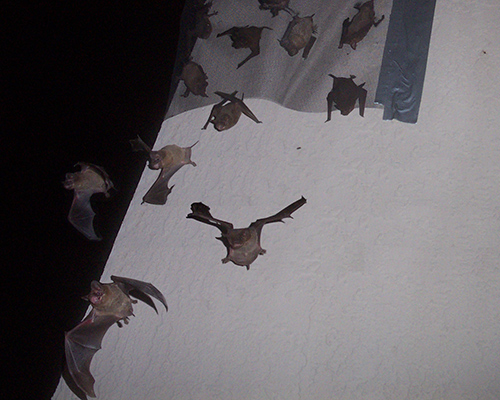
Contact us for bat removal today!
What Our Customers Say
I had a bat flying around in my house at 9pm, and CITY bat removal came right out and caught it in a net.
Sarah Lakewood
I had an annoying colony of bats stuck in my attic for a while before I finally decided to call for help. They were able to quickly and thoroughly solve the problem!
Brandon Chung
They did a great job clearing my attic of bats and didn't hurt any of the creatures.
Charlotte Demers
The technicians at CITY Bat Removal are skilled, professional, and know exactly what they're doing. Would highly recommend.
Mark O'Connor
My house stank of bats and their guano inside my wall. CITY Bat Removal not only removed the bats, they also got rid of the smell!
Alexis Ramirez
.jpg)
How Do Bats Communicate?
Few people interact with bats on a regular basis and most people want to keep it that way. This is a smart decision, as bats can carry a range of diseases, such as rabies or histoplasmosis. The downside of not interacting with bats frequently means that it can be hard to understand how they communicate.
Most people recognize that bats do not talk like humans do. That being said, given that they frequently live in colonies, they must have a system of communication. But what is it?
Echolocation Is Crucial for Bats
The main method that bats use to communicate as well as to see their surroundings is echolocation. Keep in mind that bats can also see and actually have good vision, including the ability to see in the dark. The myth that they are blind is simply a myth. In reality, they can see but they adapted echolocation as a more efficient and effective method of finding their surroundings. Echolocation provides more detail on distance, location, size, and shape than their eyes would.
What Is Echolocation?
With echolocation, bats emit sounds that are at a very high frequency. Humans can only hear some of these sounds. Bats then pay attention to how long it takes for the sounds to echo back to them and use that information to figure out how far away they are. Other animals that use echolocation include dolphins, killer whales, and certain birds.
Most people think of bats using echolocation to get to know their surroundings, but it is also part of their communication with each other.
Echolocation Means that Bats Communicate with their Mouth and Ears
If you want to put how bats communicate using echolocation in simple terms, you can. They emit the sounds for the echolocation with their noses or mouths. They use their ears to hear the response.
In this way, they are like us as we use our mouths and ears to communicate. The big differences are that some species also use their noses to emit the sounds and that they also use echolocation to "see" their surroundings and enhance their vision.
They Also Make Other Sounds
As they roost in their colonies, bats also make a lot of noises. This partly lets them communicate with the rest of their colony and it partly lets them use echolocation to confirm where everything and everyone is.
Their Sounds Are Highly Varied
Based on research from experts, we know that bats produce a variety of sounds. They use different sounds for different purposes, such as a male mating call versus an alert of danger versus a sound to mark territory. Interestingly enough, while we can't hear all the sounds that bats make, the human ear can typically distinguish the tone of a male bat from the tone of a female bat.
Scientists who have researched bats say that their calls tend to feature 15 to 20 syllables. These syllables can include chirps, songs, and clicks. To put this in perspective, humans are the only other mammals that can create such complex vocal sequences.
On top of that, there are variations in the sounds that bats make based on the species. There are even individual differences and differences between families. For example, each male bat will have a slightly different song that they "sing" during courtship.
The Frequencies Bats Use
As mentioned, we can hear some bat sounds but humans cannot hear most of the sounds that bats make. To put this in perspective, consider that human ears can typically hear frequencies from 20 to 20,000 waves per second. Bats regularly communicate at frequencies more than five times as high, more than 100,000 waves per second.
Part of the reason bats tend to use higher frequencies is that they provide them with more information. Essentially, using a higher frequency for echolocation gives bats more detail about their surroundings than they would get with lower frequencies.
While we cannot hear these sounds, scientists have special gear that can pick them up. This professional equipment can let us adapt the sounds in a way that we can hear, or you can simply see the frequencies on a screen and know the equipment recorded bat sounds.
Given how complex bat communication can be with such long calls or songs, scientists are very interested in learning more about it.